Most individuals wish to do the appropriate thing when emergencies take place. They simply hesitate at the price or the moment commitment. I have taught thousands of students, from shift workers to new moms and dads, and I have actually seen the same pattern: when the course to a first aid certificate is cost effective and clear, people follow through. When it costs a tiny lot of money or needs 2 weekdays off, enrollments delay, and neighborhoods lose qualified -responders. Fortunately is you can finish a top quality first aid course, including a CPR course, without draining your financial savings or sacrificing a week of work. You simply need a strategy.
This overview makes use of lengthy experience running and evaluating first aid training across cities, mining websites, friendliness teams, and local sporting activities clubs. I will show you exactly how to separate authentic worth from incorrect economic climates, where to locate subsidies, and how to plan for the hidden expenses that stun most first-timers. You will likewise see what level of first aid and CPR training genuinely fits your demands so you avoid overbuying a credential that adds cost without adding safety.
Where prices come from and exactly how to keep them down
Course charges seldom float randomly. A number of fixed expenses drive the rate: accredited instructors, compliant training spaces, insurance policy, manikins and consumables, and certification management. Some providers, such as First Aid Pro and similar nationwide companies, take advantage of scale. They can load classes reliably and spread out prices across several places, which allows them offer competitive prices. Smaller sized neighborhood instructors might bill a little bit extra per seat yet make up with adaptable scheduling or employer billing.
You can bend this cost structure in your support. Select midweek evenings or early mornings, when class area is cheaper and lineups are simpler to load. Look for blended distribution that moves concept online, because you after that need only a brief in-person useful session to demonstrate abilities on tools. Group reservations bring the per-head price down greatly. If three or 4 associates sign up with each other, several suppliers immediately use a team discount rate, and some will certainly even send a fitness instructor to your website at no added price if you strike their minimal headcount.
Discounts often hide in ordinary sight. Unions, expert associations, and community teams often work out participant prices for first aid courses. Sports clubs and childcare networks do the same. Also if you do not belong to one, you can occasionally sign up with for a modest annual cost that greater than pays for itself in training discounts.
What sort of credential do you actually need
Before you go shopping on cost, decide on the ideal level of training. Spending for the incorrect certification is just one of one of the most costly errors. The label first aid and cpr course covers a variety of content.
- If you need workplace compliance for a reduced to moderate danger environment, try to find a typical first aid and CPR course that aligns with your local regulator's fundamental requirement. This is generally an eight-hour combined style, with 2 to 4 hours in person. If your role includes kids, such as very early youth education and learning or sport coaching for minors, you likely require first aid and CPR courses that consist of pediatric-specific modules like air passage differences, choking for infants, and anaphylaxis response. If your task is high risk, for example construction, remote fieldwork, or hefty manufacturing, you might require advanced first aid, oxygen therapy, or remote location components. Those are longer and much more costly. Do not sign up in them unless your role or legislation requires it. If your qualification is still existing however nearing expiration, a CPR refresher course is faster and less expensive than a complete recertification. It allows you demonstrate compressions and breaths to standard and refresh AED usage without retaking the whole first aid course. If you are a health or aged-care worker, your company may specify a particular code, brand name, or service provider. Verify that demand initially. Picking the wrong one implies paying twice.
Choosing appropriately can cut 20 to 60 percent off your invest and conserve a day of time. As an instance, a friendliness worker who needs CPR and fundamental bleeding control does not require a remote location course. On the various other hand, a park ranger would certainly be squandering money on an urban-only class if their obligations consist of long transports and ecological hazards.
How blended understanding trims expenses without cutting quality
I made use of to run just full-day classroom training courses. The discovering high quality was great, however expenses were high. Traveling, venue service, and payroll for instructors to inform the exact same concept repetitively added up. When we introduced mixed styles, two things transformed. Conclusion prices climbed up because individuals might deal with the theory in other words bursts, and our prices went down because the in-person session concentrated on hands-on skills with less hours of room hire.
In a blended first aid training version, you complete the understanding component online. You check out brief case studies, view demonstrations, and answer situation concerns. The majority of students finish this in 2 to 3 nights. The in-person functional then runs 2 to 4 hours. You collaborate with instructors on the genuine abilities that can not be examined online: upper body compressions on an adult and infant manikin, AED operation, bleeding control and wound packing, and recuperation placement with spinal considerations. You still make the exact same first aid certificate as a full-day course, provided the service provider is accredited.
The essential caution is that quality carriers do not diminish the hands-on segment below what is required to cement muscular tissue memory. You can not pack reliable compressions into a 30-minute port for an area of 12 individuals. If a CPR training offer assures a too-short functional, that is a red flag.
Price bands you can expect, and just how to review them
Prices differ by area and regulative structure, however the adhering to bands are realistic for many city locations:
- CPR course only, blended style: approximately 40 to 90 devices of regional currency. Higher if course dimensions are little or if the carrier consists of pocket masks and barrier gadgets for you to take home. First help and CPR course, blended, workplace compliant: often 80 to 160. Cost climbs with pediatric components, oxygen treatment attachments, or if the company assurances very tiny groups. Advanced or remote modules: generally 180 to 350. Consists of even more gear, even more circumstances, and longer assessment.
Within these bands, look at what is consisted of: electronic or plastic first aid certificate, same-day issue or within 48 hours, cost-free resit if you do not fulfill assessment on the day, and whether AED and infant CPR method are ensured as opposed to "if time allows." I would rather pay 15 more for guaranteed baby manikins than discover the class is adult-only.
A word on "flash sale" ads. In some cases they are authentic, particularly at the end of a month when companies wish to fill up staying seats. Occasionally they are secured versus an inflated "market price" that no one ever before pays. Contrast at the very least 2 rivals. If one company checklists 220 deleted to 99 while others kick back 110 to 130, you are looking at advertising, not magic.
Hidden expenses that do not show up on the booking page
The sticker price is only part of your invest. The rest tends to sneak in sideways.
Parking and transportation matter. City-center locations might cost you 20 to 40 in car parking for a half day. You might conserve even more by selecting a rural venue or a website near a transit line, also if the program cost is slightly higher. Pause work is the main unnoticeable expense for per hour employees. A Saturday early morning useful can cut that to no. If you need to go on a weekday, choose the initial session of the day so you can function a mid-day shift.
Consumables cost money if they are not constructed right into the cost. Some suppliers consist of take-home sets: a number of triangular plasters, a resuscitation face shield, nitrile handwear covers, and antiseptic wipes. Others upsell them at the place. If you require lots of kits for a work environment, buy wholesale from a safety and security provider after you obtain certified. You will certainly pay a portion of the per-item class upsell.
Finally, think about the rate of not practicing. CPR skills degeneration swiftly. Compression deepness and recoil accuracy decrease within 90 days for many people. If your company consists of free or affordable practice sessions, take them. Even one 30-minute refresher course in between certifications measurably lifts efficiency, which is the entire point of the credential.
How to evaluate a low-priced program without getting burned
I have actually endured deal classes that were superior and premium-priced ones that were careless. Expense does not constantly anticipate quality. These are the signals I use when I examine a provider.
Start with accreditation. Your first aid certificate should lug the marks recognized by your neighborhood regulator or sector body. If the supplier can not call the approving firm in clear terms, walk away. Next off, check course size caps. Twelve to fourteen is an affordable optimum for a single fitness instructor throughout CPR training. Once you creep past that, hands-on time per student reduces, and analysis corners get cut.
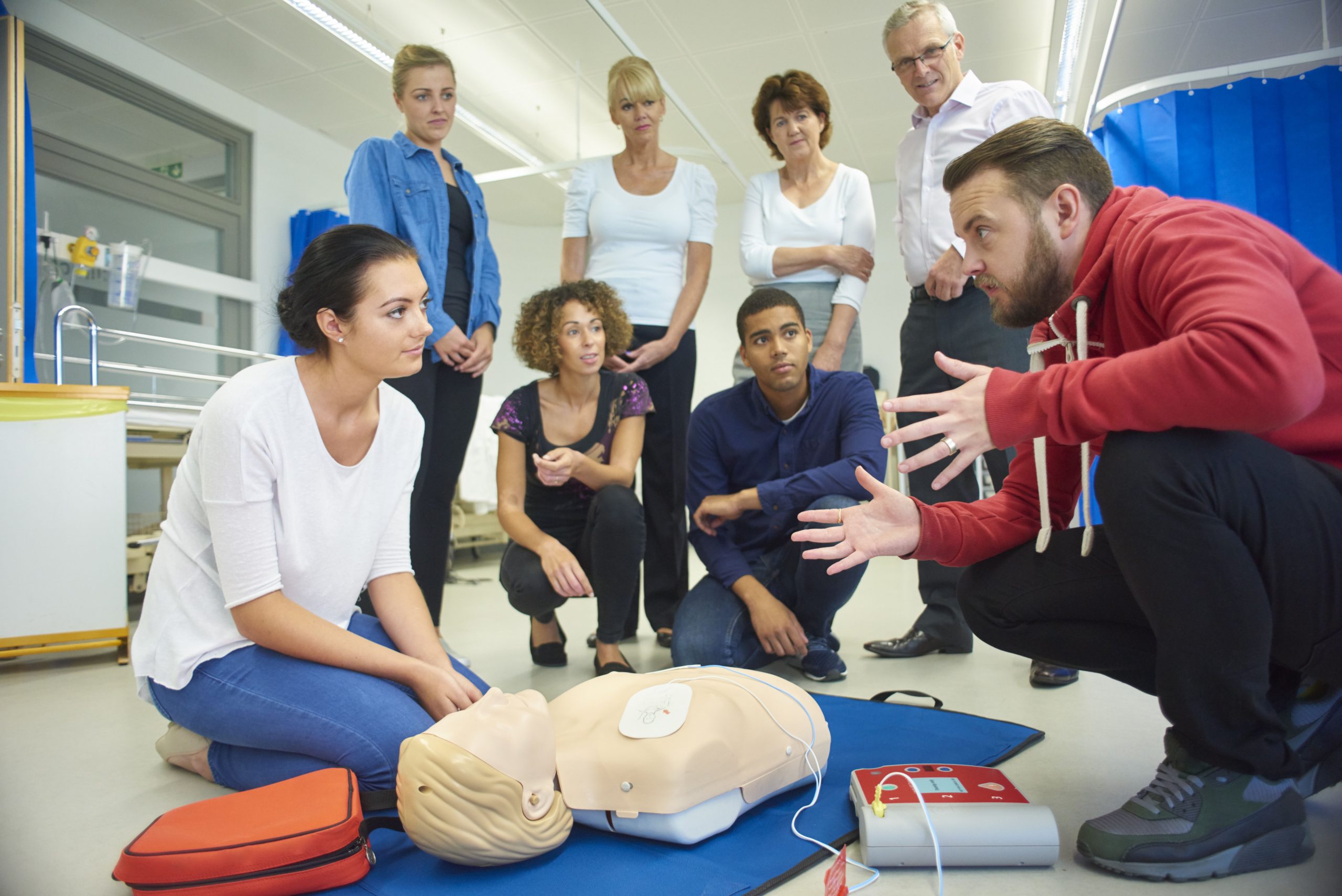
Look for clear tools checklists. A high quality first aid course gives adult, youngster, and infant manikins where appropriate, training AEDs for each and every small group, bleeding control sets with plasters and tourniquets, and consumables for technique. If the advertisement states "CPR courses" but shows only one manikin in the pictures with a full area, that is a clue.
Read reviews, yet read them in detail. High star ratings indicate little if the remarks point out hurried analyses or inadequate comments. The very best remarks commend training, scenario realistic look, and individual descriptions when students battle. I also scan for how service providers take care of failure. In a skilled procedure, if you do not get to the typical first shot, they arrange a no-cost or affordable reassessment and inform you specifically what to practice.
Where real discounts live
It aids to recognize that funds training. Metropolitan health divisions sometimes fund first aid training for sporting activities coaches and volunteer responders. Fire solutions or emergency monitoring firms fund neighborhood CPR sessions throughout heart wellness campaigns. Those sessions do not constantly lead to a formal certificate, however they are free skill practice that makes later certification easier and faster.
For formal credentials, employers carry a lot of the worry. If you can link your training to organization threat reduction, the spending plan typically shows up, also for local business. I have actually aided coffee shops claim insurance policy discount rates after team finished first aid and CPR training, especially when they handled clients with food allergic reactions. Insurance firms such as proof of decreased threat. File your staff roster, your brand-new training First Aid Course Tweed Heads routine, and your first aid set upgrades. Ask for a premium review. Even a tiny decrease offsets educating prices in the second year.
Education providers usually provide student pricing. Present a valid trainee card and you might save 10 to 30 percent. Seniors' teams discuss comparable deals. Some companies bundle a CPR correspondence course at a lower rate if you prebook your following year's session while completing the present one. That lock-in helps them intend staffing, and they share the benefit.
Lastly, keep an eye on corporate social obligation programs. Large training organizations sometimes assign a few scholarships per quarter for community volunteers or people going back to the labor force. It takes one email to ask.
The value estimation no one talks about
It is standard to warrant training with the life-or-death circumstance. That matters, and it is true that CPR done within the initial few minutes can double or three-way survival for certain heart attacks. Yet a first aid course likewise repays in daily methods. Correctly taping an ankle implies a professional athlete can go back to play a week earlier. Effective injury cleaning and pressure can maintain someone out of an overloaded emergency division. Recognizing reduced blood sugar and providing the right fast carbs avoids a collapse at a job website. These points save money and time in addition to lives.
Decorate that with a little realism. Not every emergency finishes well. I have actually debriefed learners after stopped working resuscitations. What they remember are 2 things: the tranquility they felt because they recognized the actions, and just how they supported various other bystanders with basic instructions, which mattered to the family members afterward. You can not place a tough number on that particular, but if a somewhat a lot more pricey company offers stronger circumstance training that prepares you mentally in addition to technically, that can be worth the additional 15 or 20.
Timing your training so it costs less over the lengthy run
Certification cycles differ, however several work environments require yearly CPR and triennial full first aid recertification. If you plan your calendar, you can sync these cycles. Do the complete first aid and CPR course currently, then a CPR refresher course at approximately 12 months and 24 months, then the full first aid once more at 36 months. Some carriers offer loyalty prices if they understand you will certainly return.
Aim for off-peak months. Educating firms are overloaded in January and July when workplaces reset compliance. Reserve in quieter months like March or October. I as soon as negotiated a 25 percent discount for a manufacturing facility by establishing their yearly refresher courses in late springtime when class were half empty.
Also, try to align your training with equipment checks and set restocking. When you finish a course, you are most knowledgeable about where your gear fails. Order provides right then, and work out mixed shipping or bulk prices. It is less costly than panic-buying after an incident.
What to expect on the day, without the fluff
A regular blended first aid and CPR course runs with a brief icebreaker to see who has experience and who is new. Good instructors do not lose time with long introductions. They put you on manikins early. You practice compressions to a metronome, going for appropriate deepness and complete recoil. You will certainly alternating between grown-up and infant manikins if your course includes youngster modules. AED drills comply with. Expect to handle several versions so you can adjust in the wild. The voice triggers differ, yet the series does not. Gloves on, pad positioning, stand clear, shock, return to compressions.

Bleeding control is following. You will exercise direct pressure, wound packing with gauze, and tourniquet application where appropriate. If you have never ever applied a tourniquet correctly, anticipate real effort. It ought to harm your forearm a little to reach occlusion pressure, also on a training limb. Instructors should coach you via it and demonstrate how to note the time and monitor for bleeding breakthrough.
Choking circumstances are short and straight. You will drill back blows and abdominal thrusts for adults, and chest thrusts for babies. The key is not toughness. It is positioning and rhythm. A good instructor will certainly correct your hand placement continuously. That is what you pay for.

If pediatric web content is consisted of, your trainer ought to talk about differences in respiratory tract makeup, indicators of breathing distress in children, and common triggers of anaphylaxis. You must see auto-injector instructors and practice on an upper leg instructor. It takes seconds, but self-confidence right here matters. Timid usage wastes medicine.
Assessment generally mixes observation and brief inquiries. Trainers will certainly ask you to clarify why you selected an action, not just which step. If a service provider deals with the analysis like a formality, you are not getting value. You need the difficulty to retain skills.
The online finding out that deserves your time
Pre-course components vary in top quality. The best ones are lean and case-based. They show a two-minute video clip of a spectator scenario, after that ask what you would certainly do initially, second, 3rd. They utilize repetition intelligently, revisiting core ideas in a little different contexts. Poor modules drown you in text and pretend you will absorb it all. You will not.
Give on your own time. 2 or first aid course Salisbury area 3 evenings of 45 mins defeats a single late-night cram. You click here will certainly get to the useful even more relaxed, you will pass with less stress, and you will remember a lot more in six months. If your service provider allows you download and install quick-reference cards for your phone, save them. I maintain a simple chain-of-survival card on my home display. Under discomfort, you desire motivates, not essays.
Picking a carrier: a short, decisive checklist
Use this straightforward, five-point check to compare suppliers quickly.
- Accreditation is explicit and current, including recognition of your sector's needs. Class caps and equipment ratios are stated, with adequate manikins and AED trainers per small group. Clear rates that provides what is included, how and when you receive your first aid certificate, and any kind of resit policy. Schedule options that fit your life: evenings, weekends, or brief practicals near public transport. Reviews that discuss strong mentoring, realistic scenarios, and considerate handling of worried learners.
If a provider like First Aid Pro or a neighborhood equal hits these marks and is available in at a fair cost, publication it. If they miss two or even more, keep looking.
A quick tale from the field
Years ago, I ran a CPR course for a warehouse staff on a slim budget. They picked a blended design and a Saturday morning slot to stay clear of overtime. We cut costs even more by holding the course in their break space, which saved venue charges. Three months later on, one of them used those abilities on a distribution driver who collapsed outside. They had an AED on site since they had discussed a small insurance policy discount rate for mounting one after their training. The chauffeur gained back a pulse prior to paramedics arrived. The staff lead told me later that one of the most beneficial component was not the dramatic conserve. It was how the team moved with purpose due to the fact that they had pierced the roles: one called emergency situation services, one brought the AED, one began compressions, an additional got rid of the area. That choreography took an added 45 minutes of situation work during the training course. It cost nothing yet focus, and it transformed a budget program into a life-altering one.
Final guidelines to prevent overpaying
If the carrier packages a pocket mask or first aid set at a costs, skip it and get your own later on. If they supply same-day certificate issuance for an upcharge and you do not require it quickly, take the typical 24 to 2 days. If the only readily available port this week is an expensive main area, check a residential area following week. The difference in vehicle parking alone will certainly remove the fare.
Ask regarding business prices also if you are a group of 2. Numerous service providers establish their threshold low since they favor predictable bookings. If the cost still feels high, demand a termination listing spot. You may get a call the night prior to for an affordable seat.
Finally, be straightforward about your interest span. If a one-day intensive will leave you worn down and absent-minded, do not choose it due to the fact that it looks effective theoretically. Spread out the knowing. The least expensive training course is the one that develops into action when it counts.
Budget-friendly does not indicate simplistic. With a concentrated search, a determination to pick blended delivery, and a clear feeling of the credential you require, you can finish first aid and CPR training at a reasonable cost and maintain it current with short, inexpensive refreshers. When someone you like, deal with, or hand down the road needs assistance, you will certainly not be considering the dollars. You will certainly be glad you spent sensibly in a skill set that settles you on an ordinary Tuesday as long as it does on the hardest day of your life.